

to make the red clay bi plastic leather, I source the red clay from a fallen tree in the woods
Category: Practice


augmenting spoil – making from waste


tied using hemp as a structural component as it is also a local industry historically and produced waste like the coal extraction did…


identifying minerals
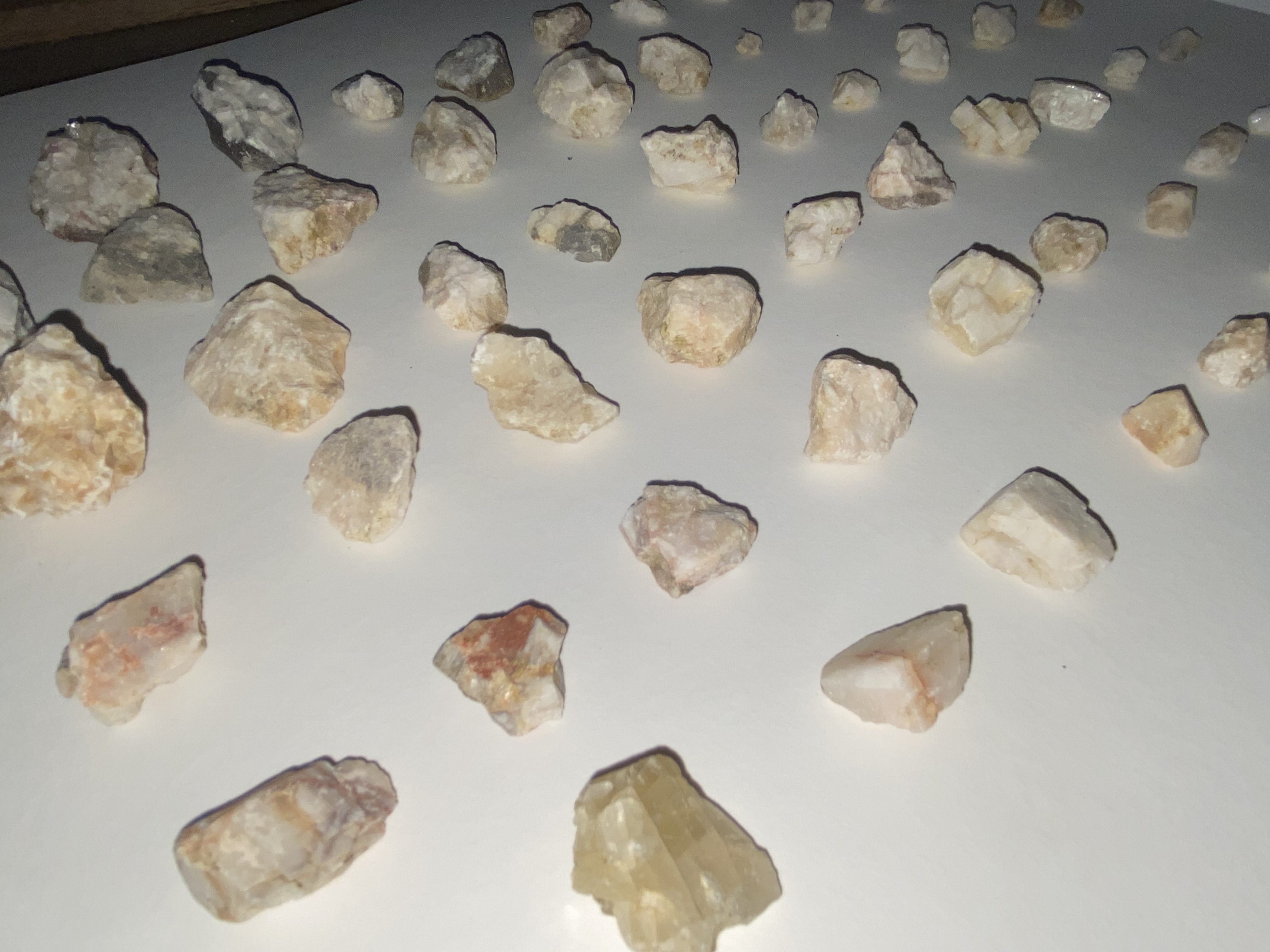
finally got a geologist respond to me 🙂 turns out I’ve been collecting coal and the slag material


I begun making collages of the images of the locations each rock was collected in


I like making the visualisations of my collections to look sort of science fictional as these could be specimens from future extracts, those trying to figure out and extract the cultural waste of these spaces along with the physical waste
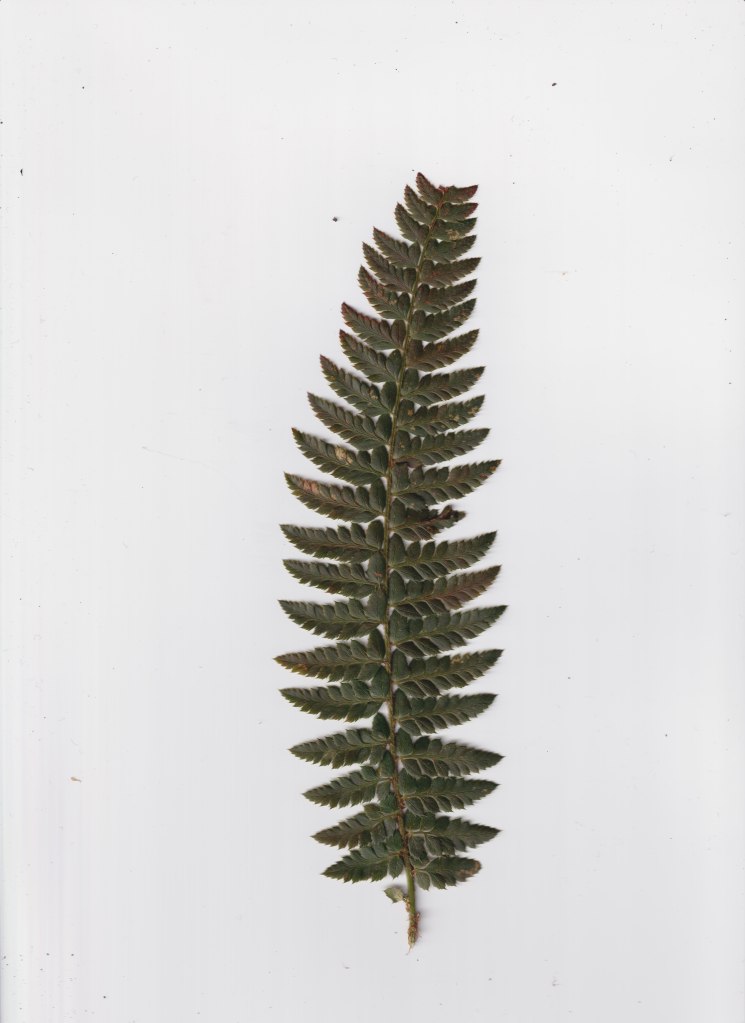
I tried to get a similar aesthetic going with the plant specimens

designer as the extractor
in the future, as we move towards new energy systems we will perhaps find new ways to understand our relationship with extraction practices. the carbonscape is visibly embedded in the UK’s landscape and pose an opportunity to reengage with the planets metabolism and the way in which it transforms what humans categorise as waste into what the non human deam as a resourse.
due to the content of these hills they have their own temporal transition from the ecologies around them and through their own time frame, transform and effect the nature cultures they are placed within. from these sites of indirect extraction emerge different scales of non-human colonisation and different forms of vibrancy and volatility.
humans construct concepts of material waste whilst also committing cultural waste in the process. the concept of wasting something is ignoring its actor network and its potential to produce stories that may help form new understandings for the future.
the act of extraction is here reenacted by the individual through the process of walking and archiving. the scavenger evolves into the expert extractor of both the tangible and the intangible, the physical and the cultural….
sitting next to coal

i return often to the spoil hear, my chosen site of information extraction, in order to think and sit and wonder and be.
on a particularly beautiful afternoon, i was sat next to a fallen tree which had brought with its routes and abundance of spoil content exposed – that which was previously concealed by the very thin layer of misleading top soil. the natural processes of a large tree falling over had exposed the spoil contest and drew me too it. here a found an abundance of the slates and mudstones that the spoil is typically made ups from
then
i saw a glistening rock…


I brought it home and me and my brother pondered what it could be… eventually we deduced it might be tar and even a petro chemical plastic of sorts …
I decided to go back to the site again and EXTRACT my own resource.
(the dig)

I collect rock samples from 4 sites.


I collected every leaf I could find growing on the spoil and scanned them in at 1200 dpi when I got home:
- common holly (ilex)
- crumpy plumeless thistle (carduus crispus)
- elmleaf blackberry (rubus ulmifolius) (fungi – pharagmidiaceae)
- hard shield fern (polystichum)
- italian arum (arum italicum)
- lesser burdock (arctium)
- common holly (ilex)
- crumpy plumeless thistle (carduus crispus)
- elmleaf blackberry (rubus ulmifolius) (fungi – pharagmidiaceae)
- hard shield fern (polystichum)
- italian arum (arum italicum)
- lesser burdock (arctium)
- common holly (ilex)
- crumpy plumeless thistle (carduus crispus)
- elmleaf blackberry (rubus ulmifolius) (fungi – pharagmidiaceae)
- hard shield fern (polystichum)
- italian arum (arum italicum)
- lesser burdock (arctium)
- primrose (primula veris)
- stinging nettle (urtica dioica)
- top left – dogd mecury (mercuralis perennis) bottom left – winegrape (vitis vinifera), bottom right – elderberry (sambucus nigra)


contact sheet of some of the photos taken of site

choreographies of remediation
developments on remediation glove – thinking about how I can make an armature for the back. interested in how the bod interacts with a space in a non conflict/slow resistant kind of way…
a person is laying on their back, taking in the sensual surrounding… but the object they wear informs them of the movement they must do to remove the remediating ‘precious stones.
the rocks I collected from the limestone quarry site turned out to be more the quartz crystal between the lismtones as opposed to just the stones themselves….
this doesn’t make me feel attuned to the energy of the stone… although that sounds more spiritual than practice, it is undeniable that i was drawn to the crystal and not the pure stone.
Ordinary yet extraordinary, colorful and clear, Quartz crystals are the most common and abundant in the world, comprising the largest and most diverse family in the mineral kingdom. “From ancient times to the present day, quartz crystals have been a source of Light to mankind. Highly valued by spiritual leaders and healers as well as scientists, the unique attributes of quartz have played a key role in mankind’ evolutionary development.” (Baer, R, “Windows of Light” preface)
Composed of silicon and oxygen (silicon dioxide), Quartz, from the European “quarz“, is a key component in a wide array of minerals designated as “silicates.” It occurs as prismatic hexagonal crystals in compact masses and druses, as well as in dense fibrous or grainy formations without visible crystals. It is also an important mineral element in common rock such as granite, quartzite and gneiss, and in sedimentary conglomerates like sandstone. [Simmons, 317][www.Quartzpage.de]
I wanted to look into polishing as I thought there was something interesting in the process fo transforming a material ‘precious’…
the care and love that we install on some minerals and not others. interesting how coal has and has such a currency to it, such a value in a monetary sense, yet quartz has and emotional history, a cultural value between people attuned to a particular type of energy…
I managed to source a rock polisher from a friend!!!! you are meant to use 4 types of grit but because limestone quarts (or snowy quarts) is quite so soft, it was unlikely to get to a very spectacular shine/polish so I thought I’d just use the first type of grit for this test. it still took 4 days…


flash/non flash images of quartz before and after polishing
scotch book pages of planning out how to make the armature…


to do it I first needed to make a pattern of a bodice garment… not very easy without help from textile workshops but did m best (and luckily I have an old mannequin


now I needed to use this pattern to make a tray for the bio material…


now just need to wait and see how it dries…. hopefully in the shape of the mannequins back…
wearable remediation glove – informing interaction with soil
remediation can be an emotional endeavour as much as a physical one. I really like the concept of remediation. the theoretical landscape it carves out… the emotional engagement of human to non human. the need to cure or heal a anthropogenic environmental circumstance…
definition of remediation:
noun: remediation; plural noun: remediations
- the action of remedying something, in particular of reversing or stopping environmental damage.
- the giving of remedial teaching or therapy.
- early 19th century: from Latin remediatio(n- ), from remediare ‘heal, cure’ (see remedy).
diced to test ideas of bodily remediation of moments by creating materials that will temporarily hold the limestones within the material…
to start with used gelatine bioplastics because of my knowledge of the recipe and the consistency of the material ie – its liquid, low viscosity when being cooked and then its flexible yet tough quality when tried. I attempted placing the stones into the molten mixture both instantly (so they were more submerged) and 5 minutes after pouring into mould (so that some rocks were embedded into the upper most surface of the material).


wanted to test making an wearable objects for a part of the body that interacted with the ground, informing a rubbing of the body against the earth in the hope of dislodging some of the embedded limestone, aiding the regeneration of the acidity of the soil


Limestone remediation
borrowed a soil condition measurer from a friend in my local village…. the results proved that the spoil is fairly acidic and also explains why the vegetation growing there is mainly those that can colonise low nutrient soil – ie without many nitrates and phosphates


marking the locations I took soil measurements

(extract explaining the use of limestone – or more accurately, ground lime… but Limestone still holds the same remediatory properties.
Williams and Chadwick (1977) addressed the problems of seasonal fluctuations of plant available nutrients in acid spoil material, where macronutrients may be low and toxicity levels high. They state that such ations may have considerable significance in the establishment and survival of vegetation, and that the effects of these fluctuations may be even greater in the surface layers of the spoil because of the variation in spoil temperature and moisture. Their study of Mitchell’s Main colliery spoil heap in south Yorkshire showed significant seasonal variations in the levels of several elements in acidic colliery spoil and that addition of limestone reduced both the concentration of these elements and the seasonal variation. It was concluded that the solubility of aluminium, manganese, copper, zinc and iron are closely controlled by soil pH.

begun collecting limestones from near b y quarries… found the calcite crystals amongst the debris of the quarry walls, was instantly drawn to these whiter crystal-like objects as opposed to what I typically think of as limestone, pale greys and cream rocks.


the interest for me was more in the fact a substance of remediation for one extraction sites ‘waste’ lay in the waste of another extraction sites… in a mere 3 mile radius

upper circle is the site of acidic spoil, the lower circle is the site of remediatory stone.
I created the topographic, 3D map using QGIS
choreographies of remediation
reshaping how we view waste
spoil heaps are the visible landscapes carved out by our carbon based energy system. as we are yet to move away from these unimaginably damaging systems, how can looking at the waste remnants from these practices evolve how we interact with energy systems.
can new perspectives of waste and making these sites ‘precious’ shift out outlook towards invisible energy systems like during fossil fuels. carbon emissions are invisible whilst the waste product produced in extracting the material remain in a similarly invisible manner, blending intone background of the landscape whilst seating into our environments and causing prolonged and indirect visible damage (waterways/stunted vegetation growth/sliding onto civilian settlements).
making these sites visible through per formatively engaging with remediation.
REMEDIATION….
its means to heal or cure. this term does not just have to be one that is applied to practical human intervention to transform environmental circumstances so that they become less ‘hazardous’ to either humans are elements of a ecosystem that humans dream ‘in need of healing’.
this term can also be applied to a world view. to the human psyche. how can we heal our perspective on waste and the systems these wastes arise from?
on the one hand remediation is a practical process of prohibiting future discomfort to humans through soft and hard interventions.
on the other hand, remediation can be an act of learning. what choreographies of healing can I explore? sites where by humans have dumped what they deem ‘waste’ can be a site to form new relationships.

FROM RESOURCE TO RESOURCE
to allow these ‘zones of waste’ to recolonise and create their own systems out from the terraforming foundation of which humans make for them, we can engage with creating theses circumstances. soil acidity is a problem for vegetation growth and colonisation of roots. Lime is an alkaline agent and can be derived from limestone. in a 3 mile radius from these ancient sites of extraction are these holes of constant rock extraction. one extraction aids the return of an another waste.
these rocks could be collected and disseminated in a performative act of remediation. a dance of remediation. the future of human existence on gia will much revolve around undoing catastrophic damage and innovating ways to allow our environments to reclaim themselves. what could these small acts look like? what choreography represents such an act of healing mentality?
PRECIOUS REMEDIATION
stones have long since been highly regarded in extraction value systems. the precious stone sits on jewellery and on royalty and holds sentimental value for those that hand them down through generations. the act of making a stone precious – its polishing.
this act of love and value can be applied to the soft systems of remediating our landscapes.


25/03/21 – compiling the carbon scape network…
steel works
hydrogen and electricity planst
clay
coal tar – cosmetics / paper mulch / pigments
re shales – buildings / construction
fossils
material based collective action – weight resulting in mass political organisms
fungi / bacteria
calcium / heavy metal tolerant plants
heating from mining voids under large percentage of the uk
human signatures / petitions
soldier flys
politicians
environmentalists
conductivity
worms
pyrite
limestone
protest groups
spoil heap monuments
tufa springs
landslides affecting railways
birch trees / legumes
coal authority website
…..
an thing for each letter of the alphabet…. perhaps including soundscapes also… maybe the vowels? in order to create a sort of story / collage as you engage with the issue of the ups carbon based energy system..

could signing or ‘typing’ a name generate a story of the carbonscape? the disjointed and disparate nature of an online petition could instead be the format in which you generate a new understanding and engagement with the sprawling network of the UK’s carbon based energy system… instead of finding ways to create collective engagement it would foster a new type of engagement beyond the human and towards the broader nature-culture.
24/03/21 – bodygound
performative engagement with environments. contact with the ground


 THINKING RESEARCH