Bowel Sounds Identification and Migrating Motor Complex Detection with Low-Cost Piezoelectric Acoustic Sensing Device

2. Material and Method

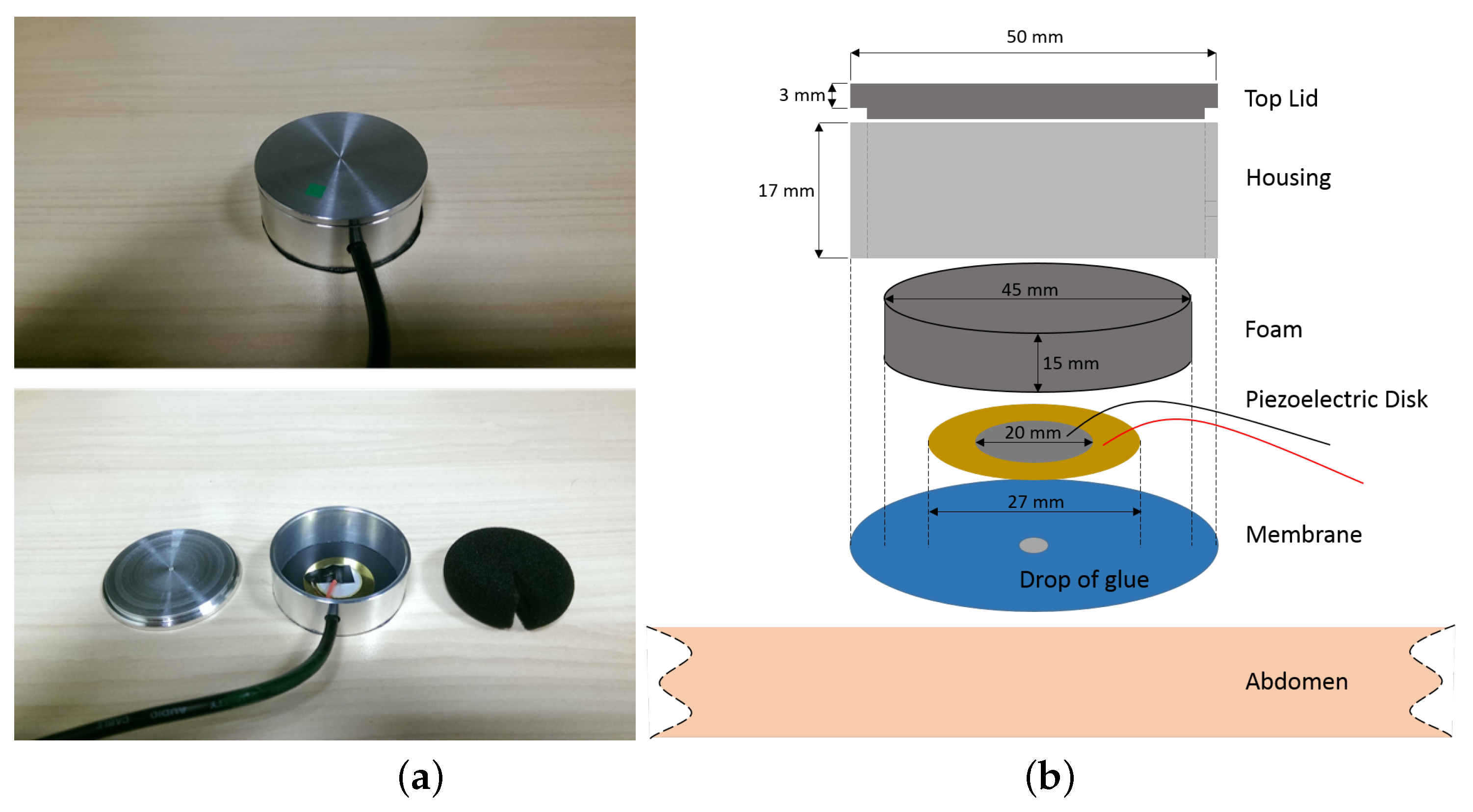
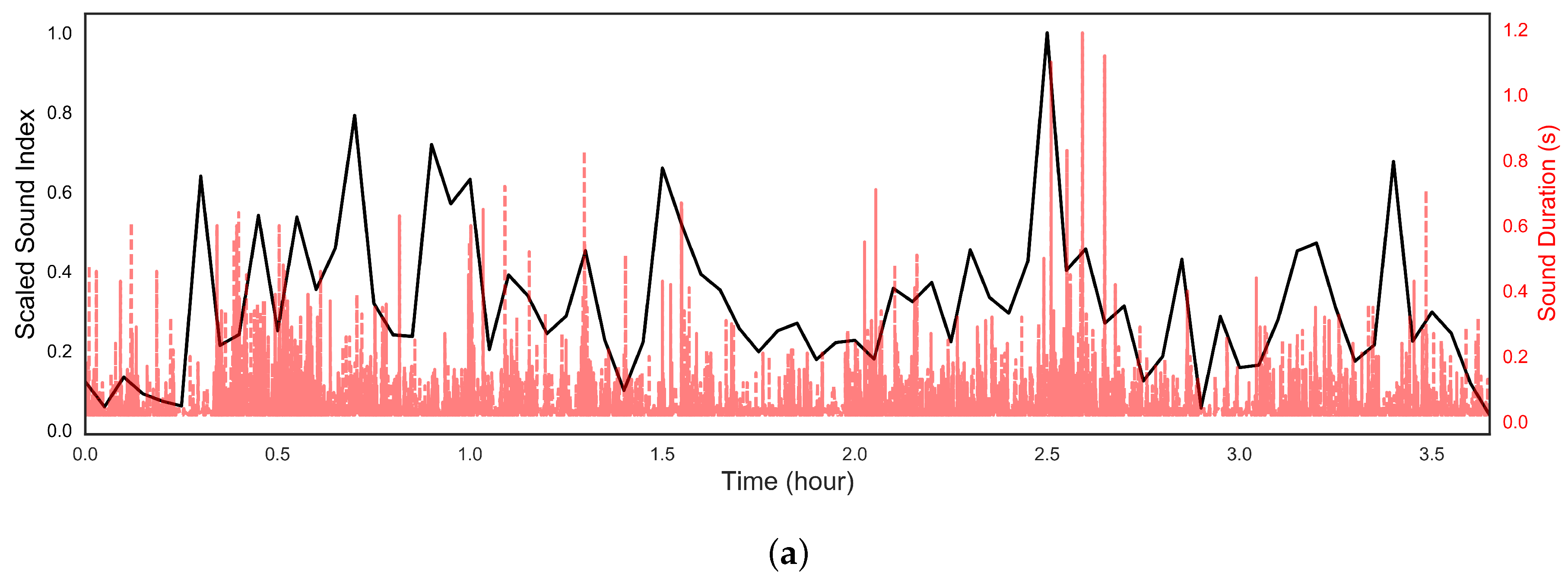
A low-cost and straightforward piezoelectric sensing head that connects to a sound recorder (e.g., a personal computer) was used for BS recordings. This piezoelectric sensing head consisted of a solid housing, a membrane, a piece of foam and a piezoelectric disk. The piezoelectric disk is composed of a PZT ceramic circle on the top of brass circular base, with diameters of 20 mm and 27 mm, respectively. The thickness of the disk is 0.52 mm and the resonant frequency and impedance are 4200 Hz and 300 Ω, respectively. This piezoelectric disk is commercially available, and the reader could buy it online. The sensor head configuration is shown in Figure 1 with dimensions. Due to the stimuli mechanism of piezoelectric sensors, which are triggered by vibration, the housing can effectively block out the ambient noise. In addition, the housing was made from aluminum material, which effectively suspends friction noise from the belt and clothes due to its smoothness. A piece of foam was inserted inside underneath the top lid to push down the piezoelectric sensor and membrane therefore establishing a better contact with the abdomen. The piezoelectric sensor was attached to a membrane at the center with a dot of glue. Subsequently, the BS related vibrations of the abdomen can be transferred to the piezoelectric disc effectively. The sensor was compared to that of a state-of-the-art electronic stethoscope (Litmann 3200) when listening to BS and showed a similar performance. A stretchy tubi-grip belt was used to hold the sensor head at the right location. This low-cost and straightforward piezoelectric sensing device can effectively detect the BS with high accuracy compared to sensors used in previous research. Multiple bio-indexes can be observed such as sound index, sound duration, and the MMC.

Two experiments were designed to record BS passively for BS identification and MMC detection and observation, with the study approved by the UWA Human Research Ethic Office (study no. RA/4/1/8893).

First, two-hour recordings were taken from each of ten participants (participant No. 1 to 10) with 44.1 kHz sampling frequency. This quantity of participants was selected because it was found to be useful in previous studies of the individual characteristics of BS [26,27,29,30]. A single sensor head was attached to the lower quadrant of the abdomen. This site was selected to minimize interference from other organs (heart and lungs) and provide a large amount of BS (following Cannon [7]). To measure standardized ‘clean’ BS without any food influence, the participants were required to fast overnight and skip breakfast. They were asked to sit still in a quiet room for two hours during which sounds from the bowel were recorded. Subsequently, the 20 h of recordings were processed, and several features were extracted, analyzed, and compare to previous research findings

Review Reports Versions Notes

Abstract

Interpretation of bowel sounds (BS) provides a convenient and non-invasive technique to aid in the diagnosis of gastrointestinal (GI) conditions. However, the approach’s potential is limited by variation between BS and their irregular occurrence. A short, manual auscultation is sufficient to aid in diagnosis of only a few conditions. A longer recording has the potential to unlock additional understanding of GI physiology and clinical utility. In this paper, a low-cost and straightforward piezoelectric acoustic sensing device was designed and used for long BS recordings. The migrating motor complex (MMC) cycle was detected using this device and the sound index as the biomarker for MMC phases. This cycle of recurring motility is typically measured using expensive and invasive equipment. We also used our recordings to develop an improved categorization system for BS. Five different types of BS were extracted: the single burst, multiple bursts, continuous random sound, harmonic sound, and their combination. Their acoustic characteristics and distribution are described. The quantities of different BS during two-hour recordings varied considerably from person to person, while the proportions of different types were consistent. The sensing devices provide a useful tool for MMC detection and study of GI physiology and function.

Sounds have more recently been exploited as biomarkers in fields as diverse as joint ageing and degeneration [5], and placental pathophysiology [6].

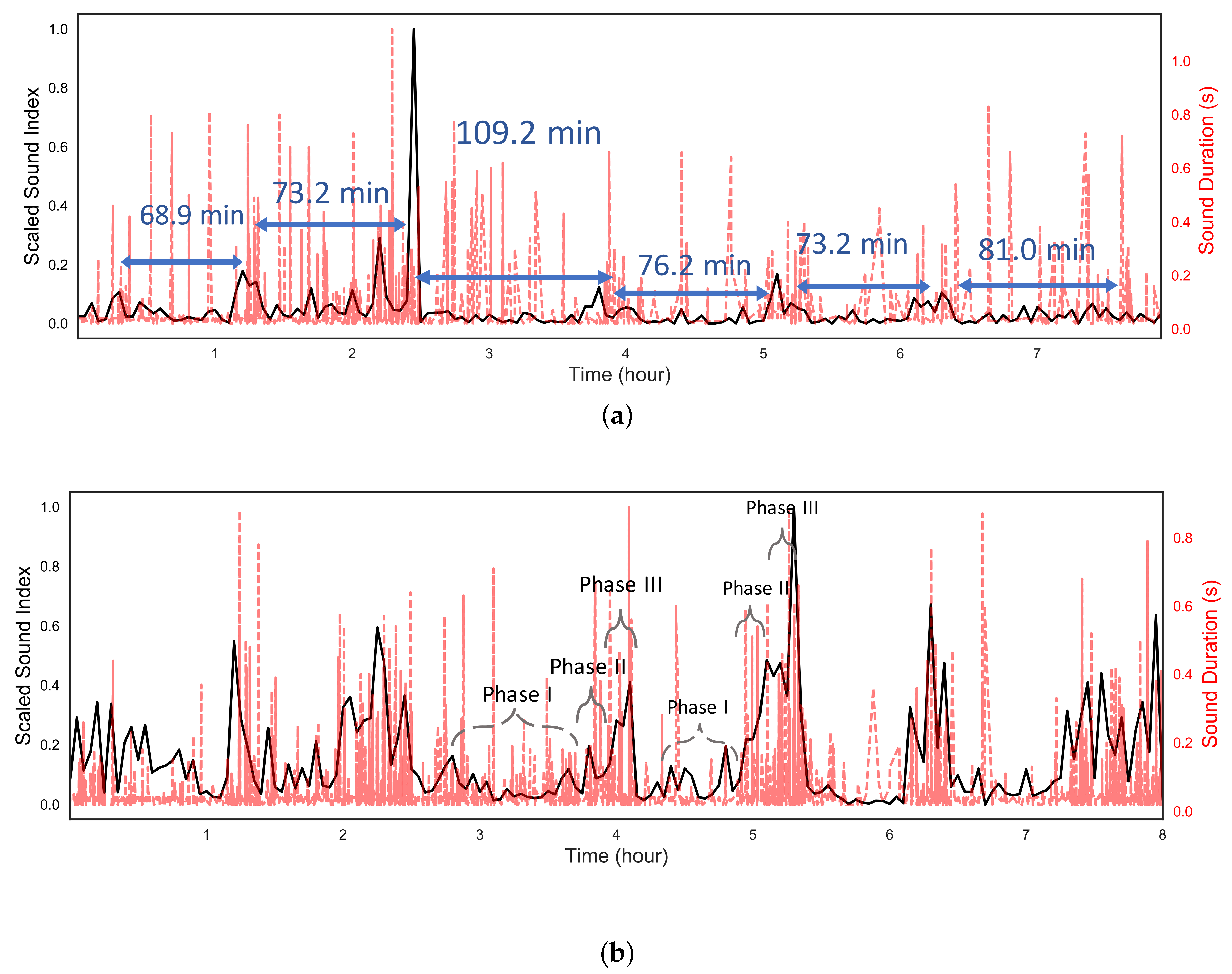
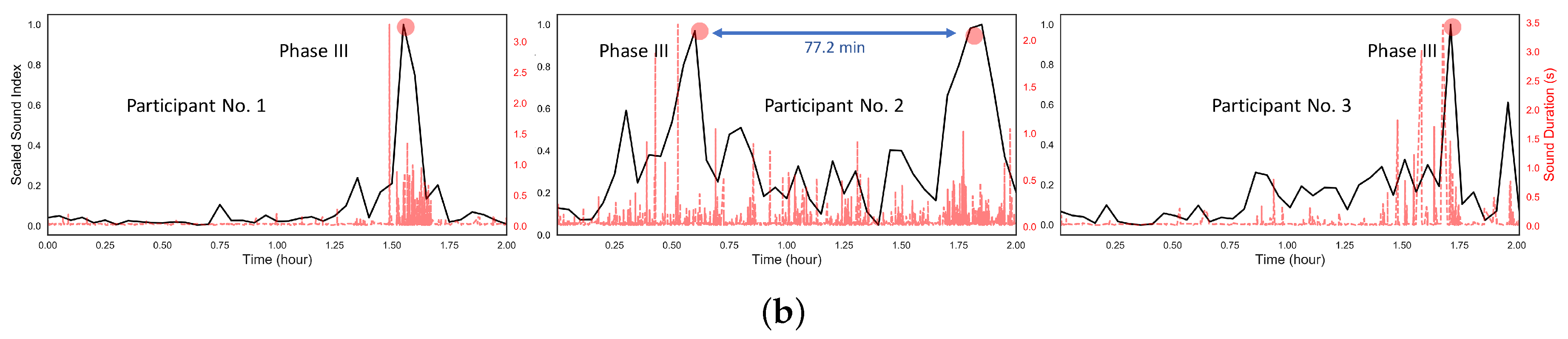
Second, a total of twelve hours of BS recordings were taken from participant L, primarily for study of the MMC. Recordings were made using two sensor heads, one placed on the upper abdomen and one placed on the lower abdomen, simultaneously. Participant L was asked to fast overnight, skip breakfast and recorded under fasting conditions for eight hours to see the MMC cycle. Both the sound duration and sound index over the eight hours of recording were documented in this stage. Another four hours recording after a meal was conducted to investigate how the MMC changed after the meal.

3. Result and Discussion

3.1. Bowel Sound Categories

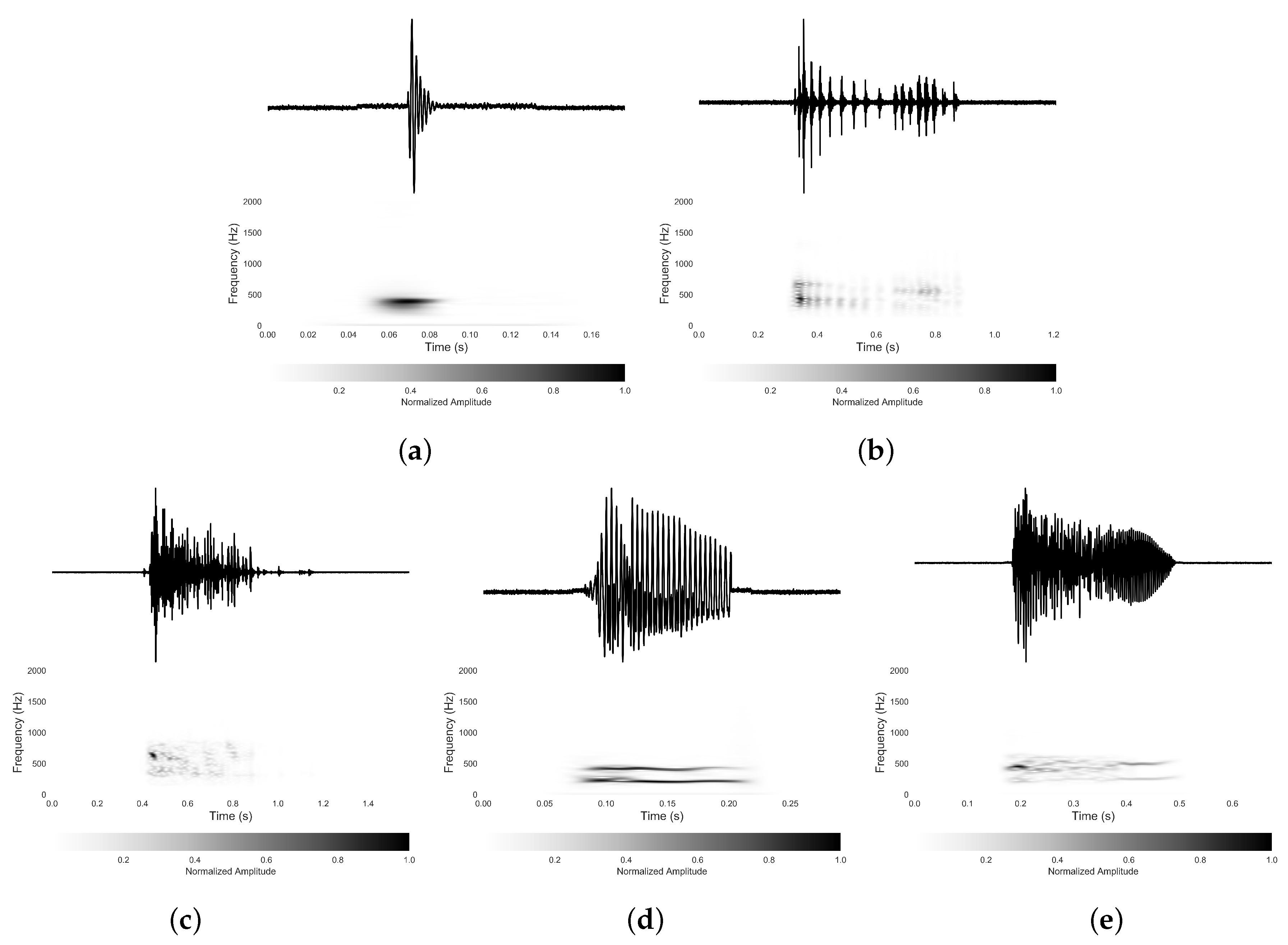
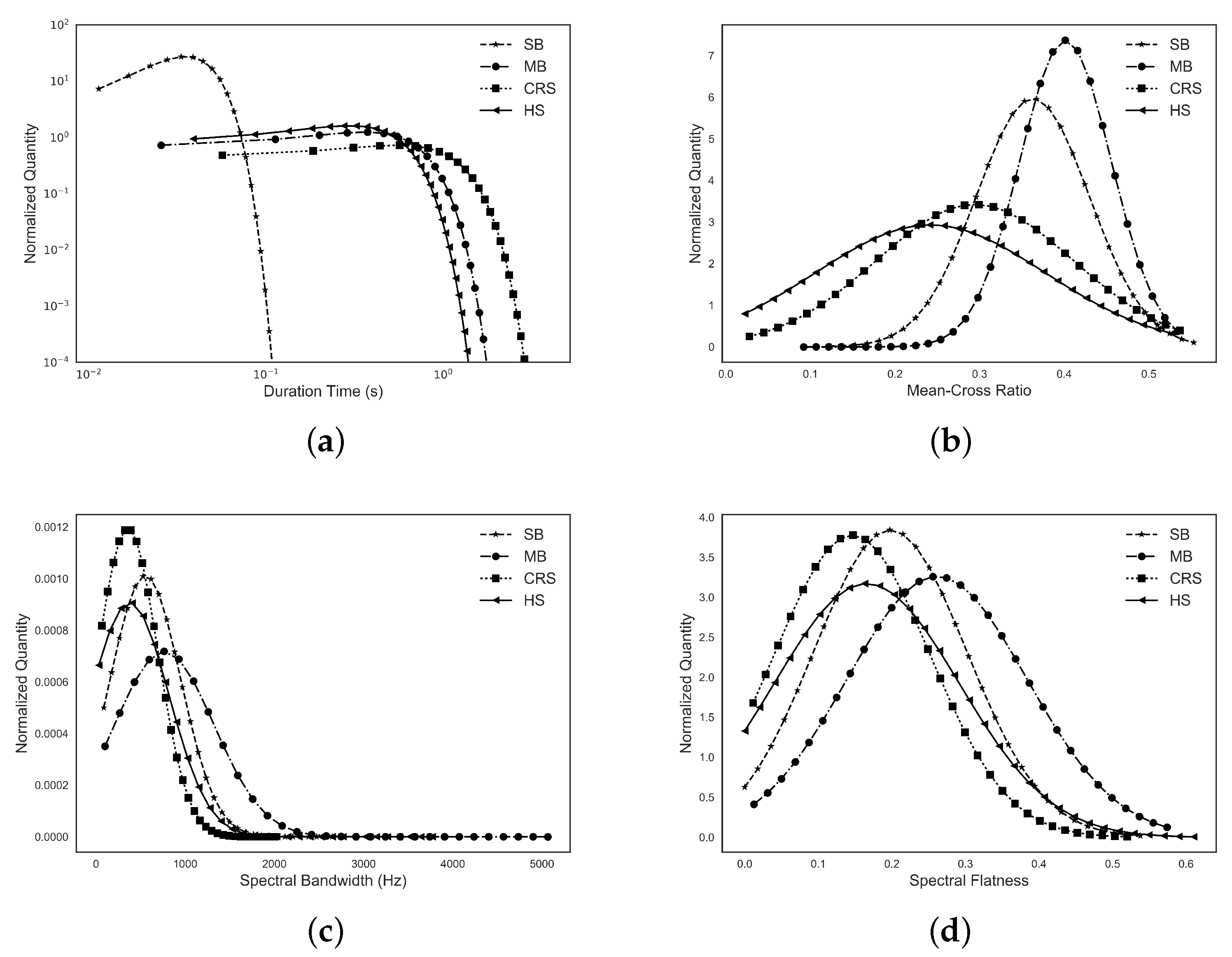
Using the 20 h of recordings from ten participants, we identified five typical types of BS with our proposed sensing device. They were identified according to their time and spectrogram information expanded based on short time Fourier analysis [31]. These five types of BS are classified as a single burst (SB), multiple bursts (MB), continuous random sound (CRS), harmonic sound (HS) and a combination sound (CS), as shown in Figure 2. We were subsequently able to link these BS types to other BS descriptions in the literature, which further validates the performance of our acoustic sensing device.

sound therapy

OUTCOMES FROM RESERACH:

Guthealth:
Body vibrations can potentially impact absorption in the distal small intestine through physical and neurological mechanisms. The vibrations stimulate tactile receptors in the skin, muscles, and deeper tissues, leading to increased cellular metabolism and blood circulation, which can enhance fluid and cellular waste transport.
The mechanosensory response to vibrations in the 10-100 Hz range can impact the function of the intestinal cells, potentially optimizing the absorption process and improving nutrient utilization. 

Mental Health: 240 Hz
using relaxing music with a specifically created low frequency
sound track that activated a vibrotactile transducer at the abdominal level at the back of
the chair in which they were seated – activation of Pacinian corpuscles sending an afferent impulse in the vagus nerve to the regions of the brain associated with depression.
The authors did not report what specific frequencies they employed but maintain that Pacinian corpuscles stimulated at 240 Hz have a maximal afferent output but afferent output occurs at any frequency below that
Vibration at the abdominal level [88] may then be stimulating the splenic–vagal nerve system. Specific applications of VNS include refractory epilepsy, depression, and decreasing inflammation. One of the known mechanisms by which stimulation of the vagus nerve has its effect is the release of the neurotransmitter acetylcholine.
Breath entrainment:
Slow Waves (δ waves) are oscillations with slow frequency (<2Hz) and high amplitude (>75μV) associated with a reduction of homeostatic sleep pressure [24] and protective effects from awakenings and arousal [25]. rhythmic auditory stimulation (RAS) and other vibratory means can influence breath entrainment.

  • Frequencies around 1-2 Hz are mentioned in the context of breath entrainment.
    • These low frequencies are associated with delta entrainment, which can affect the respiratory system and potentially induce relaxation responses.
  • Additionally, frequencies at 10 Hz (alpha), 20 Hz (beta), and 40 Hz (gamma) are highlighted for their role in rhythmic driving of oscillatory coherence.

Application: Depression
Sigurdardóttir et al. [ 88 ] conducted a study with 38 people with depressive disorder
(18 treatment, 20 control) using relaxing music with a specifically created low frequency
sound track that activated a vibrotactile transducer at the abdominal level at the back of
the chair in which they were seated. The premised mechanism for their intended effect
was the activation of Pacinian corpuscles sending an afferent impulse in the vagus nerve to the regions of the brain associated with depression. The vibratory stimulation treatment was applied for 20 min in eight sessions over 3–4 weeks. The authors did not report what specific frequencies they employed but maintain that Pacinian corpuscles stimulated at 240 Hz have a maximal afferent output but afferent output occurs at any frequency below that. Although not a rigorously controlled study and not measuring changes in
the vagal tone, the pilot study did find a reduction in depression scores in the treatment
group and attributes this to stimulation of the vagus nerve and the central nervous system
through the abdomen. A study by Braun Janzen et al. [89 ] that applied a very similar
treatment also found a reduction in depression and anhedonia although it did not premise
vagal stimulation.

https://www.ncbi.nlm.nih.gov/pmc/articles/PMC8157227

vibroacoustic therapy (VAT). uses 30–120 Hz.
Whole body vibration (WBV), – uses frequencies below 30 Hz
whole body periodic acceleration (WBPA)
vibroacoustic device [30]
vibrotactile transducer

Mechanism of Action for Ascorbic acid absorption -Vit C

Absorption is through an energy-dependent process that has two mechanisms: simple diffusion and active transport. Two transporters are involved: SVCTs (sodium-dependent vitamin C transporters) and hexose transporters. The site for absorption is the distal small intestine and is regulated by renal excretion. Usual dietary doses of up to 100 mg/day are almost completely absorbed. The highest ascorbic acid concentrations are in the pituitary gland, the adrenal gland, the brain, leukocytes, and the eyes.

  • can body vibrations help absorption in the distal small intestine and the regulation by renal excretion?
  • Renal excretion is the process by which the kidneys remove waste products, excess substances, and toxins from the bloodstream and excrete them in the urine. It’s one of the key functions of the kidneys in maintaining the body’s internal environment and overall health.

Effects of Body Vibrations on Absorption in the Distal Small Intestine and Renal Excretion Regulation

  • Body vibrations can potentially impact absorption in the distal small intestine through physical and neurological mechanisms. The vibrations stimulate tactile receptors in the skin, muscles, and deeper tissues, leading to increased cellular metabolism and blood circulation, which can enhance fluid and cellular waste transport [1].
  • The tactile receptors in the skin respond to different vibratory frequencies, with Merkel disks sensitive to 5-15 Hz, Meissner corpuscles to 20-50 Hz, and Pacinian corpuscles to 60-400 Hz, potentially influencing absorption processes in the intestine [1].
  • Additionally, body vibrations may affect renal excretion regulation indirectly by enhancing blood circulation and cellular metabolism. Improved circulation can support the transport of waste products to the kidneys for excretion, potentially aiding in the regulation of renal excretion processes [1].
  • While the direct impact of body vibrations on renal excretion regulation is not explicitly discussed in the paper, the overall physiological effects of vibrations on circulation and metabolism suggest a potential link to renal function modulation [1].
  • Merkel’s disks are located in the epidermis, where they are precisely aligned with the papillae that lie beneath the dermal ridges. They account for about 25% of the mechanoreceptors of the hand and are particularly dense in the fingertips, lips, and external genitalia. – sensing vibratory strength and responding most to 5–15 Hz

Vibratory frequency ranged from 43 to 148 Hz, displacement from 37 to 783 μm, and acceleration from 18 to 311 m/s

Seven vibrators used for sexual stimulation were tested using a piezoelectric accelerometer mounted on their housing to quantify frequency, displacement, and acceleration of each. Vibratory frequency ranged from 43 to 148 Hz, displacement from 37 to 783 um, and acceleration from 18 to 311 m/s.

1.4.2. Mechanisms of Response to Vibration
The auditory and vibrotactile stimulation from low frequency sound shows effects that
are essentially the result of two categories of mechanisms: (1) physical, through muscular
and cellular means, and (2) neurological, through sensory-based stimulation of nerves and
receptors. At the physical level sound vibration is sensed by tactile receptors in the outer
skin (Merkel disks—sensing vibratory strength and responding most to 5–15 Hz), inner
skin (Meisner corpuscles—sensing vibratory frequency and responding most to 20–50 Hz), and in deeper tissues (Pacinian corpuscles—sensing acceleration and responding most to 60–400 Hz) [ 35, 36].
To avoid numbing of these sensors, VAT is usually constantly varied in amplitude (power pulsation) and/or frequency (scanning). A physical therapeutic effect can be obtained at a cellular and lymphatic level due to increased fluid and cellular waste transport, increased cellular metabolism [ 37 ,38 ], increased blood circulation, and muscular relaxation due to a resonance response. Within the brain, vibration hypothetically enhances flow of cerebrospinal fluid and speeds removal of metabolic waste [ 39]. Most research with VAT has not explored neural oscillatory effects but recent studies show [ 40–44 ] potential brain effects, especially through prolonged application of a single frequency (e.g., 40 Hz)

  • sinusoidal sound to stimulate the body for therapeutic purposes. Skille placed particular emphasis on single pitches at 40, 52, 68, and 86 Hz modulated with a steady rise and fall of amplitude at a rate of about 6.8 s from peak to peak.
  • At a cellular or molecular level in the body there is probably no difference between activation by air molecules applying regular sine wave pressure on the body, by a surface applying oscillatory pressure stemming from a rotating motor shaft, or by the body itself moving against gravity on an oscillating platform. Another way to understand this can be in comparing the application of sound to produce vibration and the application of vibration to produce sound. Sound, which propagates through a material can vibrate the material and be physically felt like a massage, such as in a vibroacoustic device [30].
  • rhythmic sensory stimulation (RSS) and is inclusive of multiple types of pulsed (rhythmic) stimulation. RSS includes whole body rhythmic movement, vibrotactile stimulation of all or part of the body, auditory pulses delivered as individual sound units (like hits on a drum, plucks of a string, interaction “waves” resulting from binaural detunement, or isochronous amplitude modulated sound trains) or as molecular compressions that create continuous sound (research usually focusing on low frequency sound 20–130 Hz), and visual light flashes or flicker.

Dr. Jean-Martin Charcot, the most noted neurologist of that century, began studying PD with the chair but acknowledged an earlier physician, M. Vigoroux, who in 1878 used a sounding box with a very large attached tuning fork played with a bow to successfully treat patients with hemianesthesia and locomotor ataxia [21]. Charcot also described treatment of neuraglia and migraines by Dr. Boudet of Paris with tuning forks mounted on small boards. Gilles de la Tourette, Charcot’s assistant, applied the idea of vibration therapy to the brain [19,20,21] with a metal helmet he devised with a motor on top causing the helmet to vibrate at 10Hz. It was found to have a positive effect on insomnia, migraines, and depression and other vague conditions [21].

1.2.2. Current Therapeutic Application Concepts for Vibration 

Whole body vibration (WBV), also referred to as whole body periodic acceleration (WBPA) is one type of application that grew out of the 18th and 19th century interest in vibration. WBV, a mechanical vibration typically created with stand-on oscillating platforms, developed largely in response to concerns about the effect of weightlessness in space on bone and muscle and then was quickly applied in sports [22]. Although current WBV platforms can produce vibration frequencies up to 100 Hz, frequencies below 30 Hz are most commonly used. The past 20 years has seen growing interest in the effects of WBV on bone density, orthopaedic, and neurological concerns

More in keeping with the early uses of tuning forks for sensory stimulation is the practice of low frequency sound therapy (and most closely related to music therapy) that has developed in the past 50 years and is now commonly known as vibroacoustic therapy (VAT). WBV typically uses frequencies below 30 Hz while VAT uses 30–120 Hz. Olav Skille in Norway and Petri Lehikoinen in Finland were the leaders in this use of sinusoidal sound to stimulate the body for therapeutic purposes. Skille placed particular emphasis on single pitches at 40, 52, 68, and 86 Hz modulated with a steady rise and fall of amplitude at a rate of about 6.8 s from peak to peak. A noteworthy application of this method in research was done by Wigram [25,26]. Instead of single frequencies, Lehikoinen used constant frequency scanning with the intent to treat muscles at their particular resonance frequency, slow power pulsation to prevent muscle contraction, and at times directional movement of the sound [27]. Lehikoinen developed the NextWave chair system that was Federal Drug Administration (FDA) and British Standards Institution (BSI) approved in 1996 for three claims related to physioacoustic therapy: increased blood and lymphatic circulation, decreased pain and stress, and increased muscle relaxation and mobility [28]. Numerous devices that include chairs, chair backs, beds, mats, pillows, backpacks, and smaller hand-held units have been developed since then.

  • FDA approved

To review the literature related to vibration, one of the fundamental questions requiring clarification is whether the stimulation of the body with sound waves is different in some way from mechanical vibration. Since people hear sound waves and feel mechanical vibrations, an easy conclusion is that the two are categorically different. However, sound in essence is mechanical vibration that transmits through a medium [29]. In the medium of air, the sound actuator creates a vibration that results in regular compressions and decompressions of air molecules that travel to the receiving surface on the body such as the ear’s tympanic membrane or the mechanoreceptors in the skin. In water a rapidly oscillating membrane would create compressions and decompressions of water molecules. Once in contact with the body, the compression and decompression of the surface of the body is transmitted through bone and tissue and may be sensed by a set of mechanoreceptors or by our auditory system.

At a cellular or molecular level in the body there is probably no difference between activation by air molecules applying regular sine wave pressure on the body, by a surface applying oscillatory pressure stemming from a rotating motor shaft, or by the body itself moving against gravity on an oscillating platform. Another way to understand this can be in comparing the application of sound to produce vibration and the application of vibration to produce sound. Sound, which propagates through a material can vibrate the material and be physically felt like a massage, such as in a vibroacoustic device [30]. Mechanical vibration can also produce sound. Bone conduction headphones are commercially available and are built to be positioned along the skull. The mechanical vibration of the bones of the skull propagate to the inner ear and are perceived as sound [31]. Therefore, the interchange of sound and mechanical vibration demonstrate that they are in essence the same thing.

2. Vocabulary and Inclusion Clarification is needed about the vocabulary used in this field. We have already explained VAT and WBV. Another term used is rhythmic sensory stimulation (RSS) and is inclusive of multiple types of pulsed (rhythmic) stimulation. RSS includes whole body rhythmic movement, vibrotactile stimulation of all or part of the body, auditory pulses delivered as individual sound units (like hits on a drum, plucks of a string, interaction “waves” resulting from binaural detunement, or isochronous amplitude modulated sound trains) or as molecular compressions that create continuous sound (research usually focusing on low frequency sound 20–130 Hz), and visual light flashes or flicker. Pulsed ultrasound can also be regarded as a type of vibrational mechanical stimulation and is typically applied in 2 ms bursts but with varying ratios of sound to silence from 1:1 (250 Hz) to 1:20 (45 Hz).

three central concepts of vibration mechanisms for further searches: the effects of vibration on the blood, the nerves/brain, and bone/muscle. 

vibration and blood mechanism”, “vibration and neuron mechanism”, “vibration and brain”, “vibration and bone/muscle mechanism”, etc., followed by specific mechanism like endothelial stimulation or mechanoreceptor response. 

epithelial cells.

At the physical level sound vibration is sensed by tactile receptors in the outer skin (Merkel disks—sensing vibratory strength and responding most to 5–15 Hz), inner skin (Meisner corpuscles—sensing vibratory frequency and responding most to 20–50 Hz), and in deeper tissues (Pacinian corpuscles—sensing acceleration and responding most to 60–400 Hz)

To avoid numbing of these sensors, VAT is usually constantly varied in amplitude (power pulsation) and/or frequency (scanning). A physical therapeutic effect can be obtained at a cellular and lymphatic level due to increased fluid and cellular waste transport, increased cellular metabolism [37,38], increased blood circulation, and muscular relaxation due to a resonance response. Within the brain, vibration hypothetically enhances flow of cerebrospinal fluid and speeds removal of metabolic waste [39]. Most research with VAT has not explored neural oscillatory effects but recent studies show [40,41,42,43,44] potential brain effects, especially through prolonged application of a single frequency (e.g., 40 Hz).

NO regulates blood flow and vascular tone by affecting the vascular smooth muscle with the activation of the enzyme guanylate cyclase (sGC) [52] and the phosphorylation of extracellular signal-regulated kinase (ERK1/2) [53]. Although the purpose of stimulation, mode of vibration delivery, and frequency of vibration varies, endothelial cell stimulation releases NO and induces blood flow. The effect has been observed with whole body periodic acceleration using a platform (pGz) at 2 Hz [54], with microcirculation in the skin at 47 Hz [55], externally applied vibration to the arm at 50 Hz [34], sonic vibration applied to the chest at 100 Hz [56], and at various body surfaces at 150–250 Hz [57].

Application: General Blood Flow Since vibrational stimulation induces blood flow, this may find general application to conditions resulting in decreased blood flow like diabetes. Maloney-Hinds [34] used 50 Hz vibrational stimuli for five minutes on participants’ forearms and found NO production increased by 374% in the healthy controls and by 236% in the diabetes group. Skin blood flow was significantly increased (p = 0.0001) in both groups. Johnson et al. [58] studied diabetes patients with whole body vibration at 26 Hz and also found significant increase (p = 0.01) in skin blood flow but with less effect than Maloney-Hinds using direct to skin vibration.

In a more detailed examination of the effects of WBPA on the brains of mdx mice, Lopez et al. [63] found an overload of calcium and sodium ions and an overproduction of reactive oxygen species (ROS) in the neurons resulting in cognitive dysfunction. After WBPA for one hour per day for eight days at 8 Hz, results showed that the elevation of calcium and sodium ions and the overproduction of ROS had been mollified along with an increase in enzymes that protect cells. This study again demonstrated the efficacy of pulsed stimulation of the endothelium to release nitric oxide and a cascade of factors that result in neuroprotection and neurotherapy.

Koike et al. [72], motivated by the intent to find why music therapy might be useful for Alzheimer’s disease (AD) patients, conducted a study to determine if vibratory sounds might enhance neurite outgrowth. They focused on an in-vitro examination of PC12m3 cells known to be sensitive to nerve growth factor (NGF) that induces differentiation of nerve cells and neurite extension. They looked specifically at the p38 mitogen-activated protein kinase (MAPK) activity that has been shown by research with electrical stimulation [71] to be a pathway to enhancing PC12m3 cell growth, and which also appears enhanced in AD. They found that vibratory sound in the 10–100 Hz range had a positive effect on neurite growth with the strongest effect being at 40 Hz whereas vibratory sound at 150 Hz and 200 Hz had little effect. They found that 40 Hz stimulation enhanced p38 MAPK activity indicating that the neural outgrowth they observed was induced through the p38 MAPK pathway.

Kim et al. similarly examined protein expression related to neural differentiation stimulated by the 40 Hz vibration. They found that the protein calponin 3 (CNN3) promoted functional neural differentiation.

3.2. Basic Mechanism: Nerve Stimulation

Evidenced-based research repeatedly shows positive clinical effects from the application of pulsed stimulation of the body

The vibration treatment, applied with a mat they could lie on, consisted of 40 Hz sine waves for 20 min, two times a week for 12 weeks. The vibration treatment group improved significantly in both spasticity and in gross motor function.

To test whether whole body vibration at 20–24 Hz would affect sense of joint position, gait, and balance in children with CP, they randomized 24 children to physical therapy (PT) or traditional PT plus vibration for 20 min (3 min on, 3 min off) two times a week for three weeks. They found significant improvement in joint position sense and improvement in gait variables in the vibration group.

3.2.2. Submechanism: Vagal Nerve Stimulation The vagus nerve, one of the 12 cranial nerves, serves as a major parasympathetic (efferent) component of the autonomic nervous system and importantly transmits sensory information from much of the body to the brain [84]. It plays a key role in cardiac and gastrointestinal function, in muscle control of mouth and throat, in the neuroendocrine-immune system, and in the regulation of emotion including anxiety and depression. Vagus nerve stimulation (VNS) [84] is a recognized practice commonly done with manual massage or compression, electrical stimulation, or vibration including with the voice or gargling throat or with external vibrotactile devices. However, the spleen has nerve fibers that are integrated with the vagus nerve and studies [85,86] show that anti-inflammatory effects of the vagus nerve rely somewhat on the splenic nerve to the extent that stimulation of the splenic nerve results in immunosuppressive effects comparable to VNS [87].

Vibration at the abdominal level [88] may then be stimulating the splenic–vagal nerve system. Specific applications of VNS include refractory epilepsy, depression, and decreasing inflammation. One of the known mechanisms by which stimulation of the vagus nerve has its effect is the release of the neurotransmitter acetylcholine.

Recital swabs

Faecal or biopsy samples are frequently used to analyse the gut microbiota, but issues remain with the provision and collection of such samples.

There were no significant differences in key alpha and beta diversity measures between swab and faecal samples, and inter-subject variability was preserved. Additionally, no significant differences were demonstrated in abundance of major annotated phyla. Inferred gut functionality using Tax4Fun2 showed excellent correlation between the two sampling techniques (Pearson’s coefficient r = 0.9217, P < 0.0001). Proton nuclear magnetic resonance (1H NMR) spectroscopy enabled the detection of 20 metabolites, with overall excellent correlation identified between rectal swab and faecal samples for levels all metabolites collectively, although more variable degrees of association between swab and stool for levels of individual metabolites. These data support the utility of rectal swabs in both compositional and functional analyses of the gut microbiota.

REASON WHY STOOL SAMPLING IS NOT IDEAL:

Current methods of faecal sampling are not without drawbacks; in particular, the very nature of defecation means that samples cannot be provided ‘on demand’ in a physician’s office or to a research nurse and are reliant on appropriate collection by patients themselves. Faeces sampling may also present additional complexities, including the logistical challenges of having to transport samples between patient’s home, the clinic and the laboratory, often with careful attention to maintaining cold chain conditions in the process1. Qualitative research demonstrates that patients are reluctant to handle their own stool and are embarrassed about transporting faeces2. Such aversion to traditional methods is mirrored in an inflammatory bowel disease (IBD) population, where compliance with stool collection to obtain faecal calprotectin measurements may be as low as 35%

endoscopic sampling frequently requires bowel preparation, which is well-recognised to affect intestinal microbiota composition

Studies of patient opinions demonstrate high levels of acceptability for CPE detection and rectal swabbing as a method of sample collection6. Given their acceptability, ease of administration, ease of self-administration and existing utility in clinical microbiology, rectal swabs might represent an attractive means for sampling the broader gut microbiota and aspects of the gut metabolome.

’multi omics’: Multiomicsmulti-omics,  integrative omics“panomics” or “pan-omics” is a biological analysis approach in which the data sets are multiple “omes“, such as the genomeproteometranscriptomeepigenomemetabolome, and microbiome (i.e., a meta-genome and/or meta-transcriptome, depending upon how it is sequenced);[1][2][3] in other words, the use of multiple omicstechnologies to study life in a concerted way. By combining these “omes”, scientists can analyze complex biological big data to find novel associations between biological entities, pinpoint relevant biomarkers and build elaborate markers of disease and physiology. In doing so, multiomics integrates diverse omics data to find a coherently matching geno-pheno-envirotype relationship or association.[4] The OmicTools service lists more than 99 softwares related to multiomic data analysis, as well as more than 99 databases on the topic.

  • They are trying find correlations between microbiome and certain traits and therefore use a multiomics approach

An area of growing interest in this field relates to extending beyond profiling gut microbiota composition alone to also explore gut microbiota functionality; in particular, such “multi-omic” analyses are advocated to better delineate the interplay between microbe and human host9. One such key ‘omics’ technology is metabolomics, whereby advanced analytical chemistry techniques (including nuclear magnetic resonance spectroscopy (NMR) and mass spectroscopy (MS)) are used to identify and quantify small molecules within biofluids. While comparison of swabs versus stool profiles has already been investigated on a small scale for certain defined metabolite groups (including bile acids)10, this has not been explored using a global profiling technique such as NMR. 1H NMR spectroscopy detects protons within small molecules and produces a spectrum related to proton profile within the biofluid, thereby having particular utility as a global metabolic profiling technique, including host- and microbe-derived metabolites11. Other attractions of 1H-NMR includes its high-throughput nature, its reproducibility, and that it is non-destructive to the samples analysed. Data have been published regarding optimised faecal collection and preparation for 1H-NMR analysis12; such data have confirmed the detection of a range of gut microbial metabolites of key interest to health and disease, and which give potential insight into gut microbiome-host interactions. As an example, 1H-NMR typically allows the detection of short chain fatty acids (SCFAs)12, metabolites important for gut health, with strong links to microbial metabolism of polysaccharides13. However, although metabolic profiling from swabs has been shown to be effective and achievable in vaginal swabs14, data are lacking for the detection of metabolites from rectal swabs.

Method/brands:

Whole faeces were collected in a faeces collector (FECOTAINER®, AT Medical BV, The Netherlands) and COPAN FLOQSwabs™  (Copan Italia S.P.A., Brescia, Italy) were utilised as rectal swabs, given their previously demonstrated utility in faecal microbiota analysis15. The rectal swabs used were sterile with no preservative. Rectal swab collection was carried out at the same time as stool sample production and was obtained by self-insertion via the s. Faecal samples and rectal swabs were stored at − 80 °C as crude samples without the use of any cryopreservative until processed. 

16S rRNA gene sequencing:

DNA was extracted from crude faecal and swab samples using the DNeasy PowerLyzer PowerSoil Kit (Qiagen, Hilden, Germany) following manufacturer’s instruction with the modification that samples were homogenised in a Bullet Blender Storm bead beater (Chembio, St Alban’s, UK). DNA was quantified using a Qubit Fluorometer (ThermoFischer, UK), and was aliquoted and stored at − 80 °C until ready for downstream use. Sample libraries were prepared following Illumina’s 16S Metagenomic Sequencing Library Preparation Protocol16using specifically designed V1/V2 hypervariable region primers17. Pooled sample library sequencing was performed using the Illumina MiSeq platform (Illumina Inc, Saffron Walden, UK) and the MiSeq Reagent Kit v3 (Illumina) using paired-end 300-bp chemistry. Processing of sequencing data was performed via the DADA2 pipeline (v1.18) as previously described18, using the SILVA bacterial database Version 138 (https://www.arb-silva.de/ (accessed on 28th July 2020)). Raw data were filtered to remove samples with a sequencing depth of < 1000 reads; furthermore, data were filtered to remove taxa that were not present in at least 10% of samples, to remove rare taxa that cannot be distinguished from sequencing artefacts (across all samples sequenced, mean sequencing depth was 22,842 reads, with a standard deviation of ± 8060). In addition, 16S rRNA gene qPCR was performed to determine total bacterial biomass within each sample, using qPCR primers and protocol as previously described19, enabling transformation of compositional metataxonomic data into ecosystem abundance20, and removing the need for rarefaction21.

Identification of metabolites

Metabolite annotation was carried out using selective 1D TOCSY, 2D-NMR experiments, and correlation spectroscopy on 1D 1H-NMR data set34. Internal and external databases such as the Human Metabolome Data Base (HMDB; http://hmdb.ca/)35 and/or the Biological Magnetic Resonance Data Bank (BMRB; http://www.bmrb.wisc.edu) were used for confirmation of assignments.

Results

Of note, the major annotated bacterial phyla (including Firmicutes, Bacteroidetes and Proteobacteria) showed no statistically significant differences in relative abundance between swab and faecal samples 

The only phylum showing significance between groups was Campilobacterota, which was enriched in swabs relative to faeces 

regarding bacterial families, it was noteworthy that no such differences were seen in the predominant families of Bacteroidaceae, Lachnospiraceae, Prevotellaceae, or Ruminococcaceae.

These data build upon the conclusions from other studies that a rectal swab is an appropriate substitute for a faecal sample for profiling of gut microbiome composition.

mining for nutrition – soil gut

relationship between soil and the human gut?

how can and exploration of the human gut and its entanglement with soil help foster better a deeper understanding of topsoil ecosystems and ecological health? planitary soil.

I am looking at the human body as an interface to better relate to our degraded soil health. There is no global treaty of soil health yet declining nutrients are causing global health deficiencies. Soil are the foundation to nutrient cycles that sustain us all yet our relationship to it is detached and un-related and un-entangled.

The human gut and the ecosystem of the soil are comparable.

nutrients in soil is dramatically declining with conventional agriculture. soil health is an intangible concept, very far away from those of us eating and wearing the fruits of its labour. in Britain, an orange has 9 times less vitamins compared to one grown in the 1950’s. in the bread basket countries of the global south, nutrient deficiency have already impacted millions of women and girls and its predicted to only get worse.

alchemy was a pseudo scientific practice of transmutation, changing states of matter. in a global food system and climatic circumstances that will make 3% of the planet uninhabitable by 2100, where will we have to get nutrients from?

42% of UK residents struggle with IBS and gut related problems and this is often down to diet and the lack of nutrients the food we grow.

  • metaphysics – the branch of philosophy that deals with the first principles of things, including abstract concepts such as being, knowing, identity, time, and space.
  • speculative realist

TO DO

  • see if/get Regenesis out of the library – I want to go back over certain sections
  • book grow lab
    • vitamin powder
    • polarising glasses
  • ask henry if I can extract the e-waste that he volunteered
    • find tip/recycling unit to go get more e-waste – look up how to mine e-waste? youtube.
    • I should check msg with Huda and go to the tip near kings cross?
  • get some wool fibres and a woollen jumper
  • speak to grow lab about visualising the level of the vitamin and mineral molecules?
  • speak to a nutritionist….

TO RESEARCH

  • use speculative realist perspectives on hyperobjects (timothy mortom) and the real object of top soil (graham harmen)… rulling abstractions…
  • explore soil mythologies
  • soil maps of uk
  • explore specific minerals eg nitrates and phosphates
  • which same 4 bacteria dominate soil and gut?
  • Magic foods! Magic fruits! Good supplements from the future! The variety of fibre and veg we need. Cooking is chemistry, bio science 
  • Could I develop the tools to quantify nutrients in things?
  • Material characterisation (explore this skill and define the skill set and apply to this project) 
  • Nutrient characterisation? Would this use light or colour? How to build up a spectrum of characters
  • Chat to alex about soil 
  • Chat to Irene microbiome (final proj)
  • READ Polarized Light Microscopy: Revealing Hidden Structures
  • modern systems of fortifying foods
    • how could I go about extracting them from wool/soil/metals
    • IBS and gut related problems and this is often down to diet and the lack of nutrients the food we grow
  • what are the 20 sense
  • where is the data in this project?
  • is it possible to absorb nutrients through out textiles
  • Jane Scot wool 
  • Wool as substrate – living paint!?
  • explore words – as this always inspires me
  • fractal scaling? how can this be producing using runway etc? could make annimations from the vit visualisations if they work
  • need to find two locations to get soil from to compare vitamins? mind soil map?

NEW BOOKS

  • Dr. Lynn Margulis in her 1991 book Symbiosis as a Source of Evolutionary Innovation
  • Aurora – kin stanley robinson

Wendell Berry describes in his essay ‘The Pleasures of Eating’ “the industrial eater is, in fact, one who does not know that eating is an agricultural act, who no longer knows or imagines the connections between eating and the land.” ‘of cultural amnesia’

rhizosphere as gut

rhizosphere is like an external gut. in both case bacteria/microbes break down organic matter into simpler compounds that the plant or person can absorb. there are 1000 fila (major groups of bacteria) the same 4 dominate the rhizosphere and the guts of mammals. are these the most ‘cooperative’ types of bacteria? human infant immune systems are less active then that of adults, enabling a wide range of bacteria to establish in our guts, similarly young plants release fewer defensive compounds into the soil than older ones, allowing a broad verity of microbes to colonise their rhizosphere. human breast milk contains sugars called …. which are compounds that babies can’t actually digest but they are specifically to feed a specific group of bacteria that need to be developed that help to calibrate the immunes system. young plants release sucrose into the soil to feed their new microbiomes. just as the bacteria in our gut out compete and attach invading pathogens, the microbes in the rhizosphere create a defensive ring out the root – plants feed certain bacteria so they can crowd out certain pathogenic microbes and fungi, they deploy chemical warfare, releasing poisons that suppress harmful microbes and encourage helpful ones.because plants immune system co-evolved with the rhizosphere, it can’t work any other way than long back and forth communication such as releasing hormones into the soil when it is being attacked above ground sound that certain bacteria can respond by releasing their own hormone which in turn then allows the plant to release defensive chemicals in its leaves and to shut stomatta pores so fungi can’t invade

luminous symbiotic bacteria – civil war battle Shiloh Tennessee 1862, angles glow. insect eating nemetodes invaded the wounds and regurgitated bacteria and the antibiotics would have killed the other pathogens. genome mining helps to discover new antibiotics in the bacteria that live with plants

  • we need healthy and diverse soil to find antibiotics

less diverse diets with less fibre + over use of antibiotic + excessive hygiene = damages out gut biomes, reducing the number of species they contain which harms our dietry health and immunes sytems

plants seem to be less capable of fighting of pahtogens when they grow in damaged soils with a low diversity of microbes. where soil has been harmed by too much fertiliser, pesticides or fungicides, eccessive ploughing or crushing by heavy machinery, their crys for help are more likely to be exploited by parasites and pests

  • disposes = medical term for the collapse of our gut community…. this word could be applied to the unravelling of any ecosystem? (says George M)

soils with rich and well balanced microbiome suppress pathogenic bacteria that cause disease in people, making the transmission of human diseases through food less likely

  • researchers are experimenting with the agricultural equivalent of faecal implants but with soil, just as doctors take stool samples from healthy people and implant them into the guts of unhealthy patients, implanting suppressive soil into unhealthy conducive ground could suppress pathogenic bacteria and fungi
  • drilosphere = earth worm zone.
  • Nitrates and phosphates – illuminates how our invisible systems work and flow

REFLECTIONS:

I want to find aesthetic ways to visualise the unseen nutrients and microbiome of soil… to do this I need to find two locations as my comparison points? maybe in Somerset?

Why make chemical crystal images? – maybe as a comparison tool? visual aid – but also to bring imagery to the nutrients we are and are not getting from food? how this is facilitated by microbiome!

still need to work out how a comparison of gut microbiomes and soil microbiomes can be used and designed for…

maybe the outcome is a film……. at this point the imagery is more important than directly comparing two sites… which means I should get images of the vits and mins we are difficent in… and also explore the 4 bacteria that are common in both soil and gut!

Four types of bacteria commonly found in both mammals and soil include:

  1. Bacillus subtilis: Bacillus subtilis is a common soil bacterium known for its ability to form endospores, which are resistant to harsh environmental conditions. It is also found in the gastrointestinal tract of mammals, including humans, where it can play a role in gut health.
  2. Escherichia coli (E. coli): While some strains of E. coli can be harmful and cause illness, others are a normal part of the gut microbiota in mammals, including humans. E. coli is also found in soil, where it can serve various ecological roles.
  3. Mycobacterium spp.: Mycobacteria are a group of bacteria that include species such as Mycobacterium tuberculosis and Mycobacterium leprae, which can cause diseases like tuberculosis and leprosy, respectively. However, many other species of mycobacteria are commonly found in soil and are also present in the microbiota of mammals.
  4. Pseudomonas spp.: Pseudomonas bacteria are widespread in soil and are known for their metabolic versatility and ability to degrade a wide range of organic compounds. Some species of Pseudomonas are also found as part of the normal microbiota in mammals, including humans.

soil and gut mythologies

The etymology of the word soil roots us back to Latin: “solium” which literally translates as ‘seat, chair or throne’.

AUTOCHTHONOUS
The Soil’s Offspring

Demeter, in Greek religion, daughter of the deities Cronus and Rhea, sister and consort of Zeus (the king of the gods), and goddess of agriculture. Her name indicates that she is a mother.

https://www.fu-berlin.de/en/presse/informationen/fup/2021/fup_21_008-boden-naturschutzstrategie/index.html

  • good website about soil understandings

Does Soil Contribute to the Human Gut Microbiome?

  • Human Microbiome Project in 2007, aiming at sequencing all microbes (eukaryotes, archaea, bacteria, viruses) inhabiting human body sites, the Human Microbiome Project has developed into a major field of biomedical research focussing mainly on the intestinal microbial community that plays a major role in human health and diseases [3,10].
  • The intestinal microbial community represents an ecosystem of a trillion microbial cells with an aggregate 9.9 million microbial genes across the fecal microbiome [11]. The greatest number of cells within the human gut is found in the colon which supports a diverse and dense population of microbes, dominated by anaerobes that utilize carbohydrates [12]. By comparison, the lowest number of cells found in the small intestine (Table 1) is due to properties that limit bacterial reproduction such as high levels of acids and antimicrobials [12]. 
  •  The colonization of the human gut starts at birth, with the rapid expansion of microbial diversity, influenced by endogenous and exogenous factors [3], such as human genetic variation as well as diet, infections, xenobiotics, and exposure to environmental microbial agents including the large plant and soil microbiome [3]. With respect to the numerous and diverse functions of the intestinal microbiome in human health, it is evident that it is also involved in numerous gastrointestinal (GI) and non-gastrointestinal diseases, such as obesity/metabolic syndrome, atherosclerosis/cardiovascular diseases, neurologic/psychiatric diseases and others [3]. It is therefore one of the most dynamic topics in biomedical research [3].
  • Soils existed globally a long time before mammals and hominids came into existence and are by far the most extensive natural microbial gene reservoir on earth

The nutritional values of some popular vegetables, from asparagus to spinach, have dropped significantly since 1950. A 2004 US study found important nutrients in some garden crops are up to 38% lower than there were at the middle of the 20th Century. On average, across the 43 vegetables analysed, calcium content declined 16%, iron by 15% and phosphorus by 9%. The vitamins riboflavin and ascorbic acid both dropped significantly, while there were slight declines in protein levels. Similar decreases have been observed in the nutrients present in wheat. What’s happening?

THE MUSEUM

https://www.smithsonianmag.com/travel/inside-las-strangest-museum-180954803

Wilson knows that the Museum of Jurassic Technology doesn’t appeal to all. “Not everyone, by any stretch of the imagination, finds what we do to be of interest. A lot of people actually dislike what we do and think we shouldn’t be doing it.” (An example of a Yelp review: “Museums should offer something besides confusion … I guess a lot of people enjoy learning nothing at a museum?”) Those who call it an art project also constantly baffle Wilson: “People have on occasion said ‘Oh, this is like an art project.’ That is always so confusing. I don’t understand what that distinction is. When is something artistic?”

WEBSITE OF BEASTE

https://bestiary.ca/index.html

Bio-diversifying the Fashion industry

https://2021.uwdesignshow.com/projects/designing-within-multi-species-meshes

“Within the context of design, our toolkits and frameworks for idea generation and evaluation are largely human-centered and exclude the multi-species context we inherently live within. While problem-solving for humans is inarguably an important endeavor, there is a parallel necessity for expanding our well-being to include our companions on Earth— animals, plants, fungi, and microorganisms. How might we rethink and reframe our relationship with other living beings, so that multi-species flourishing and mutual ongoingness become the origin place of ideas? Within this booklet, I gather together excerpts from five authors across multiple disciplines that address alternative ways of living alongside other species. I then use this foundation to inform a set of four critical lenses, accompanied by corresponding design examples and activities. The first lens, Collective Reciprocity, considers our obligations to multi-species flourishing and looks to companion species as examples. The following lens, Contrasting Timescales, examines the discrepancies in divergent paces of living across ecological relations. The third lens, Embodied Landscapes, asks us to feel the contours and memories of our surroundings. The final lens, Nonhuman Teachers, shows us how we can learn from the lives of nonhumans who have traversed this world far longer than we have. This booklet is intended as a framework to help designers rethink and reframe our relationship with other living beings so that the work we do better contributes to multi-species flourishing. It is meant to be carried with, written in, and added upon”.

https://www.ellenmacarthurfoundation.org/fashion-examples

  • Land-use change
    • At the current pace, by 2030 the fashion industry is projected to use 35% more land for cotton cultivation, forest for cellulosic fibres, and grassland for livestock23 –
  • Overexploitation
    • Over 4% of global freshwater withdrawal is linked to the textiles industry, with consumption expected to double by 203024
    • Conventional cotton cultivation – the most waterintensive fibre production process – is often located in already water-stressed regions25
  • Pollution
    • Despite accounting for approximately 3% of total arable land, the production of cotton is estimated to use as much as 16% of all insecticides, 6% of all pesticides, and 4% of all synthetic fertilisers globally, which can degrade soil health, pollute waterways, and endanger biodiversity26
    • Out of 2,450 textile-related chemicals studied by the Swedish Chemical Agency, 5% were of high potential concern for the environment due to their capacity to spread globally and bioaccumulate, causing diseases and allergic reactions, and increasing cancer risk27
    • An estimated 35% of microplastics in the ocean originate from synthetic microfibre release28
  • Climate change
    • The fashion industry was estimated to account for 4% of global emissions in 2018 – approximately as much as France, Germany, and the UK combined29
    • At the current pace, the sector’s emissions would nearly double the maximum required to stay on the 1.5ºC pathway30
  • Invasive alien species
    • Long-range transport of raw materials and fashion products facilitates the spread of invasive alien species, which can have serious negative consequences for their new environment31

Once clothes can no longer be used, recycling them into new garments avoids the negative impacts on biodiversity associated with virgin material extraction, landfilling, and incineration. Capturing the material value of clothes that can no longer be worn minimises the need for new materials to be grown or extracted, meaning that land can be left for other uses, including food production or conservation. Recycling materials with particularly high biodiversity impacts at the fibre growing stage, like cashmere, is especially beneficial. After stopping the use of virgin cashmere in 2016 and moving to recycled inputs, Stella McCartney estimated an instant 92% reduction in their cashmere-related environmental impact, which had accounted for 28% of the firm’s total environmental impact despite making up only 0.1% of their material usage.38 Innovators across the world are developing new technologies to divert textile waste from landfill and achieve environmental, social, and economic benefits. For example, the Green Machine, developed through a partnership between the Hong Kong Research Institute of Textiles and Apparel (HKRITA) and the H&M Foundation, uses a closed loop system of only water, heat, and green chemicals to fully separate and recycle cotton and polyester blends into new fibres.39 Overall, textile-to-textile recycling can tap into an annual material value loss worth more than USD 100 billion.40

REFLECTIONS…

It would seem I’m leaning towards biodiversity as a core issue I am interested in… what this leaves me feeling is that I am neglecting far bigger issues that deal with human beings and social inequity of resources and quality of life – most prominently experiences by those in the global south