recorded the whole conversation. I spoke to both her and her husband who had worked in the limestone quarries. One very interesting thing her husband, Frankie, said was that when world war two broke, those that worked in agriculture and coal mining were liable to stay working to carry on the industries that underpinned both the nation and the war energy… whereas those that worked in the queries had to sign up. Frankie said that lots of his friends switched to going down themes in order to avoid going into the army. What horrible options…
They showed me some really beautiful objects from the mining history in their families. These included:
brass disks the minors would sue to check in and out of shift so that there was a physical signifier of whether they made it up at the end of each day
a clock that was given to a minor when they retired along with a certificate, Cherry’s father did 52 years and eventually died of a lung condition not very long after
lamps that the minors would take down with them – one had a safety contraption and would be used by a supervisor who would go down first to check that there wasn’t risk of explosion
the last objects were so cool – they were gas lit head lights where the flamed contraption would strap onto the front of the hat f the minor.
went on a brilliant walk with Veryan. She could see so much under feet and all over. She has ana amazing search image for the tiniest plants and could tel you what they meant bout the ground and the history of the land.
I really love how these projects make me think of what future humans may perceive of us. what they will make of us from the traces left behind. I think this is a really brilliant tool. speculation is like conscience raising, it brings someone out of their bubble of existence and helps us to imagine and fabricate an opinion or circumstance outside of us – whilst simultaneously being entirely linked to us…
THE CUMBRIAN BONE MARBLE
CRAFT IN THE ANTHROPOCENE
Fleur Hullemen
I like his focus on tactility. I agree that the materiality of things can really elevate understandings of a broader network. it creates a space to engage different with objects and their material and cultural origins.
with the soft ceramics, it makes me think about all there ceramics a previously interact with and why they have been unsoft, why have they not felt like clay, a substance used by the most primitive of homo sapiens, earthly material that we have innovated and manipulated to express so many social-political things…
soft ceramics
the touchables
Franklin Till
FranklinTill is a futures research agency !!!! working with global brands and organisations to explore and implement design, material and colour innovation.
Shahar Livne
Balenciaga launched ‘Afterworld: The Age of Tomorrow’, a video game specially designed for the Fall 21 collection. For this, Shahar Livne was commissioned by the fashion brand to design one of the Fall 21 jewellery line
Metamorphism
sea coalers
not a project – a phenomena where coal beds under these erode and coal gets washed up on beaches.
its a very old practice and se coalers have recently be banned from the beaches they usually collect from without being warned or confronted.
seems like a good example where by histories and livelihoods and practice are not considered enough in the present. a censoring of cultural context can be as damaging as carrying on those negative practice in the first place….
Clara Davis
Baum and Leahy
their projects are on all sorts of topics but mainly focus on allowing an audience to interactively engage with alternative perspectives –
non human ontological speculations …
they create object experiences and workshops to sensorially engage an audience with what ever it might be, algea, lichen, gut biom and attempts to find ways to alter how we understand them through reenacting their various forms of metabolising their surroundings
Meredith Wood
she is an RCA textiles/printing student looking at seaweed and algae
she’s created these really interesting bioplastic structures based
the queer institute of ecology
hozison – post anthropocene speculative futures where video game experience
finally got a geologist respond to me 🙂 turns out I’ve been collecting coal and the slag material
I begun making collages of the images of the locations each rock was collected in
I like making the visualisations of my collections to look sort of science fictional as these could be specimens from future extracts, those trying to figure out and extract the cultural waste of these spaces along with the physical waste
I tried to get a similar aesthetic going with the plant specimens
in the future, as we move towards new energy systems we will perhaps find new ways to understand our relationship with extraction practices. the carbonscape is visibly embedded in the UK’s landscape and pose an opportunity to reengage with the planets metabolism and the way in which it transforms what humans categorise as waste into what the non human deam as a resourse.
due to the content of these hills they have their own temporal transition from the ecologies around them and through their own time frame, transform and effect the nature cultures they are placed within. from these sites of indirect extraction emerge different scales of non-human colonisation and different forms of vibrancy and volatility.
humans construct concepts of material waste whilst also committing cultural waste in the process. the concept of wasting something is ignoring its actor network and its potential to produce stories that may help form new understandings for the future.
the act of extraction is here reenacted by the individual through the process of walking and archiving. the scavenger evolves into the expert extractor of both the tangible and the intangible, the physical and the cultural….
sitting next to coal
i return often to the spoil hear, my chosen site of information extraction, in order to think and sit and wonder and be.
on a particularly beautiful afternoon, i was sat next to a fallen tree which had brought with its routes and abundance of spoil content exposed – that which was previously concealed by the very thin layer of misleading top soil. the natural processes of a large tree falling over had exposed the spoil contest and drew me too it. here a found an abundance of the slates and mudstones that the spoil is typically made ups from
then
i saw a glistening rock…
I brought it home and me and my brother pondered what it could be… eventually we deduced it might be tar and even a petro chemical plastic of sorts …
I decided to go back to the site again and EXTRACT my own resource.
(the dig)
I collect rock samples from 4 sites.
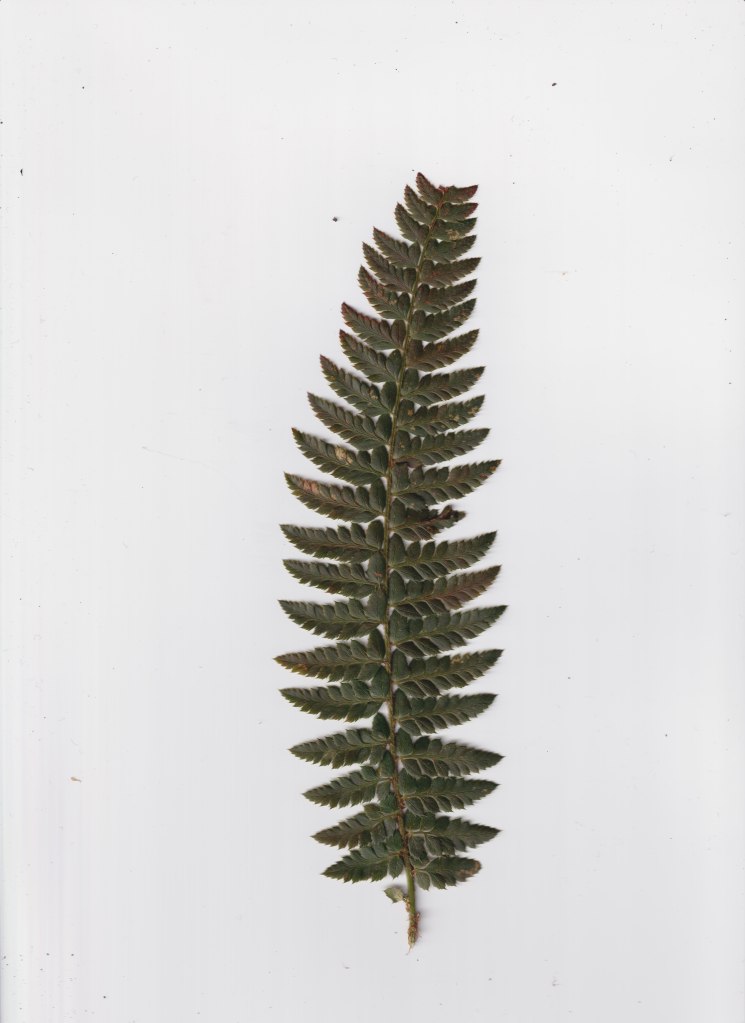
I collected every leaf I could find growing on the spoil and scanned them in at 1200 dpi when I got home:
developments on remediation glove – thinking about how I can make an armature for the back. interested in how the bod interacts with a space in a non conflict/slow resistant kind of way…
a person is laying on their back, taking in the sensual surrounding… but the object they wear informs them of the movement they must do to remove the remediating ‘precious stones.
the rocks I collected from the limestone quarry site turned out to be more the quartz crystal between the lismtones as opposed to just the stones themselves….
this doesn’t make me feel attuned to the energy of the stone… although that sounds more spiritual than practice, it is undeniable that i was drawn to the crystal and not the pure stone.
Ordinary yet extraordinary, colorful and clear, Quartz crystals are the most common and abundant in the world, comprising the largest and most diverse family in the mineral kingdom. “From ancient times to the present day, quartz crystals have been a source of Light to mankind. Highly valued by spiritual leaders and healers as well as scientists, the unique attributes of quartz have played a key role in mankind’ evolutionary development.” (Baer, R, “Windows of Light” preface)
Composed of silicon and oxygen (silicon dioxide), Quartz, from the European “quarz“, is a key component in a wide array of minerals designated as “silicates.” It occurs as prismatic hexagonal crystals in compact masses and druses, as well as in dense fibrous or grainy formations without visible crystals. It is also an important mineral element in common rock such as granite, quartzite and gneiss, and in sedimentary conglomerates like sandstone. [Simmons, 317][www.Quartzpage.de]
I wanted to look into polishing as I thought there was something interesting in the process fo transforming a material ‘precious’…
the care and love that we install on some minerals and not others. interesting how coal has and has such a currency to it, such a value in a monetary sense, yet quartz has and emotional history, a cultural value between people attuned to a particular type of energy…
I managed to source a rock polisher from a friend!!!! you are meant to use 4 types of grit but because limestone quarts (or snowy quarts) is quite so soft, it was unlikely to get to a very spectacular shine/polish so I thought I’d just use the first type of grit for this test. it still took 4 days…
flash/non flash images of quartz before and after polishing
scotch book pages of planning out how to make the armature…
to do it I first needed to make a pattern of a bodice garment… not very easy without help from textile workshops but did m best (and luckily I have an old mannequin
now I needed to use this pattern to make a tray for the bio material…
now just need to wait and see how it dries…. hopefully in the shape of the mannequins back…
remediation can be an emotional endeavour as much as a physical one. I really like the concept of remediation. the theoretical landscape it carves out… the emotional engagement of human to non human. the need to cure or heal a anthropogenic environmental circumstance…
definition of remediation:
noun: remediation; plural noun: remediations
the action of remedying something, in particular of reversing or stopping environmental damage.
the giving of remedial teaching or therapy.
early 19th century: from Latin remediatio(n- ), from remediare ‘heal, cure’ (see remedy).
diced to test ideas of bodily remediation of moments by creating materials that will temporarily hold the limestones within the material…
to start with used gelatine bioplastics because of my knowledge of the recipe and the consistency of the material ie – its liquid, low viscosity when being cooked and then its flexible yet tough quality when tried. I attempted placing the stones into the molten mixture both instantly (so they were more submerged) and 5 minutes after pouring into mould (so that some rocks were embedded into the upper most surface of the material).
wanted to test making an wearable objects for a part of the body that interacted with the ground, informing a rubbing of the body against the earth in the hope of dislodging some of the embedded limestone, aiding the regeneration of the acidity of the soil




 THINKING RESEARCH